Frank Lloyd Wright's Florida Masterpiece Hits the Market in 2025
- T Michele Walker

- Nov 21, 2025
- 2 min read

Frank Lloyd Wright designed one private residence in Florida, and it’s called the Spring House. In 2025, the Tallahassee landmark hit the market for $2.1 million. Its curving, pod-like form stands out as one of Wright’s final hemicycle designs—an architectural treasure tucked away just north of U.S. 27, not far from the interstate. The house sits quietly in the woods, surrounded by ten acres.

Wright imagined the Spring House in 1954 for the Lewis family, who became its first owners. Four kids grew up there, under those sweeping curves. Byrd Mashburn, daughter of Clifton and George Lewis II, says the decision to sell isn’t complicated. “It’s just the right time for me … It’s the right time for the family.” Seven decades have passed since her parents moved in.

This isn’t one of Wright’s grand, sprawling estates. The Spring House is cozy—2,040 square feet, three snug bedrooms. Wright believed families should spend time together, and you feel that here. The kitchen flows straight into the dining area, which blends right into the living room. “We were together most of the time,” Mashburn remembers.

The house hasn’t just sheltered a family. Over the years, it’s hosted community gatherings, fundraisers, weddings, and even kids’ campouts. Groups like MoLab Inc.’s Camp Spark have come here to experience architecture up close. Wright fans and curious locals alike have wandered its curves.
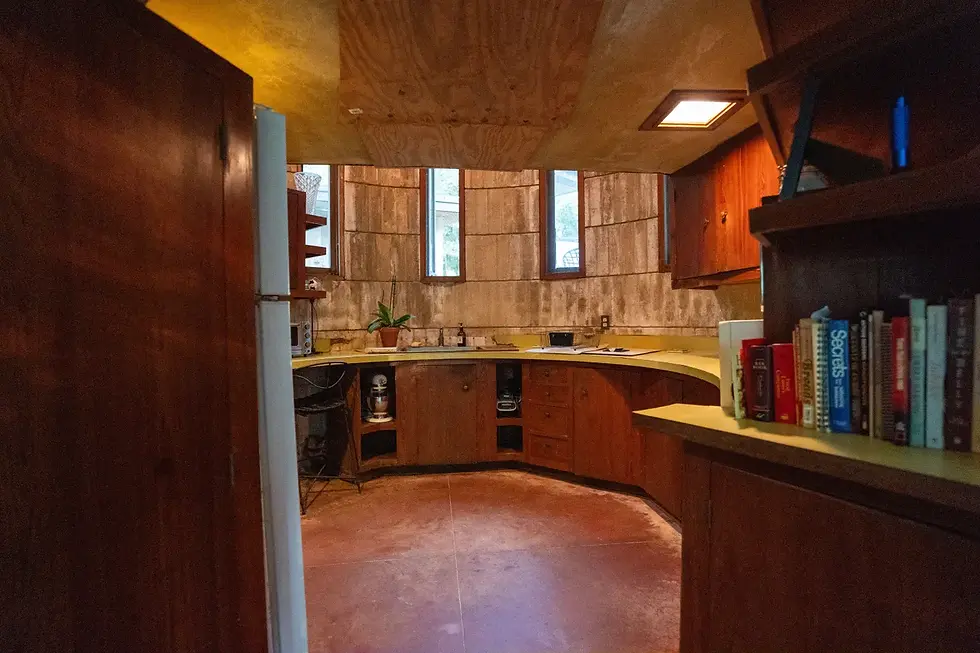
Inside, you find a kitchen that’s both practical and distinctly Wright. There’s nothing else like it in Florida—no other private home in the state bears Wright’s signature.
Wright’s influence is hard to overstate. His career stretched from 1889 to 1959. He gave the world the Guggenheim Museum in New York, which opened five years after the Spring House was finished, and his name still carries serious weight among architects. Rodney Lewis, a principal at Architects Lewis + Whitlock in Tallahassee, has visited the Spring House for historical meetings. He calls it “a quirky, small, interesting space from an interior perspective.” Wright’s impact remains. So does his vision, alive in the Spring House’s gentle curves.


Comments